Introduction to Mindfulness
Mindfulness is the practice of being fully present and aware of one’s thoughts, feelings, sensations, and surroundings without judgment. It involves focusing on the present moment and accepting it without attaching any labels or criticisms. This mental state can have a profound impact on mental wellness by reducing stress, anxiety, and negative emotions.
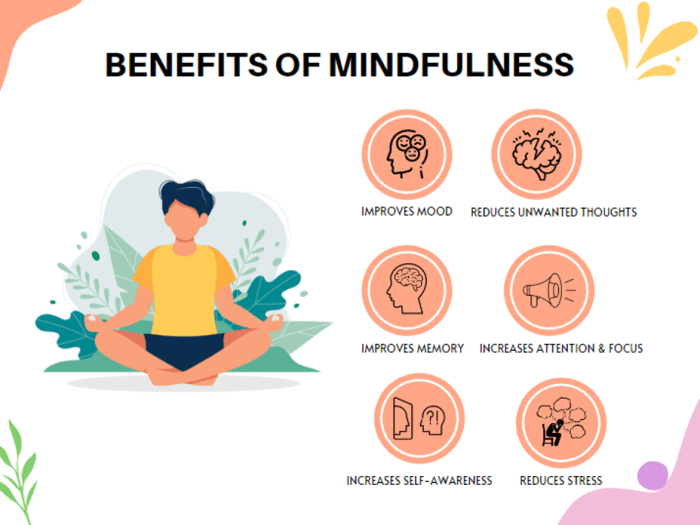
Practicing mindfulness can benefit overall well-being by helping individuals manage their emotions, improve concentration, and enhance self-awareness. By tuning into the present moment, individuals can develop a greater sense of clarity, calmness, and resilience in the face of life’s challenges.
There is a strong connection between mindfulness and mental health, as research has shown that regular practice can reduce symptoms of depression, anxiety, and other mental health disorders. Mindfulness techniques, such as meditation and deep breathing exercises, can help rewire the brain and promote a positive outlook on life. By cultivating a mindful approach, individuals can develop a greater sense of emotional balance and well-being.
Techniques for Practicing Mindfulness
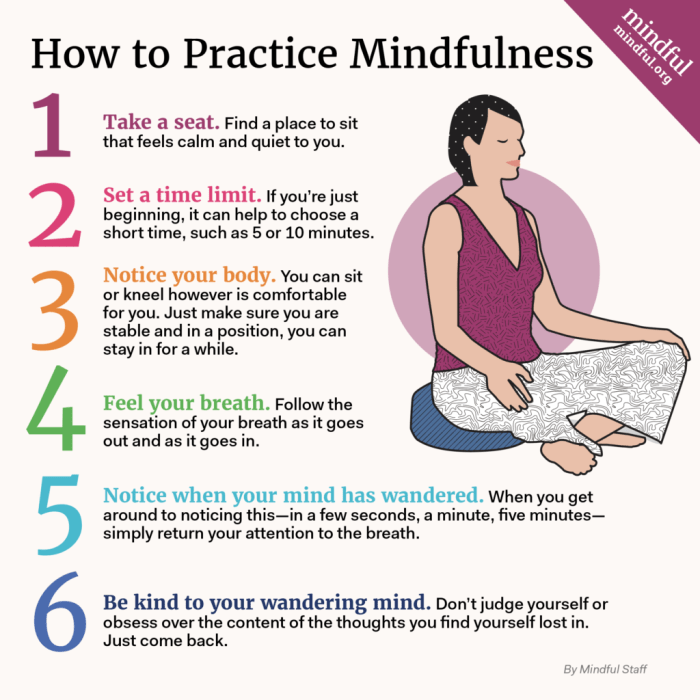
How to practice mindfulness for mental wellness – Practicing mindfulness involves various techniques that can help reduce stress and improve mental wellness. Incorporating these techniques into your daily routine can have a significant impact on your overall well-being.
Meditation
Meditation is a common mindfulness technique that involves focusing your mind and eliminating distractions. By practicing meditation regularly, you can increase awareness of the present moment, reduce stress levels, and enhance emotional well-being.
- Example: Sit in a quiet place, close your eyes, and focus on your breath. Notice the sensations of inhaling and exhaling, letting go of any thoughts that arise.
Deep Breathing
Deep breathing exercises are another effective way to practice mindfulness. Deep breathing helps calm the nervous system, reduce anxiety, and improve concentration by bringing your focus to the rhythm of your breath.
- Example: Take a slow, deep breath in through your nose, allowing your belly to expand. Hold for a few seconds, then exhale slowly through your mouth, feeling the release of tension in your body.
Body Scans
Body scans involve paying attention to different parts of your body, starting from your toes and moving up to your head. This technique can help you become more aware of physical sensations, release muscle tension, and promote relaxation.
- Example: Begin by lying down or sitting comfortably. Focus on each body part, noticing any sensations or areas of tension. Take deep breaths and consciously relax each muscle group as you scan through your body.
Mindfulness and Mental Wellness
Practicing mindfulness has a profound impact on mental wellness by helping individuals manage stress, reduce anxiety, improve focus, concentration, and emotional regulation, as well as enhance resilience in coping with life’s challenges.
Impact of Mindfulness on Stress Management and Anxiety Reduction
Engaging in mindfulness practices such as meditation and deep breathing exercises can help individuals reduce stress levels and alleviate symptoms of anxiety. By being fully present in the moment and observing thoughts and feelings without judgment, mindfulness enables individuals to cultivate a sense of calm and relaxation.
Improving Focus, Concentration, and Emotional Regulation
- Mindfulness practices enhance focus and concentration by training the mind to stay present and attentive to the task at hand. This heightened awareness helps individuals avoid distractions and improve productivity.
- Emotional regulation is also strengthened through mindfulness, as individuals learn to recognize and manage their emotions effectively. By observing emotions without reacting impulsively, individuals can respond to challenging situations with greater clarity and composure.
Relationship Between Mindfulness and Resilience
Mindfulness plays a crucial role in building resilience by fostering a mindset of acceptance and adaptability. Through regular practice, individuals develop the ability to face difficulties and setbacks with a sense of equanimity, allowing them to bounce back from adversity and navigate life’s obstacles with greater ease.
Integrating Mindfulness with Physical Fitness
Combining mindfulness practices with physical exercise can significantly enhance mental wellness by fostering a deeper mind-body connection, reducing stress, and improving overall well-being.
Benefits of Mindfulness in Physical Activities:, How to practice mindfulness for mental wellness
- Improved Focus and Concentration: Mindfulness techniques can help individuals stay present and focused during physical activities, leading to better performance and enjoyment.
- Stress Reduction: Mindfulness can help reduce stress levels associated with exercise by promoting relaxation and enhancing self-awareness.
- Enhanced Mind-Body Connection: Practicing mindfulness during physical activities can help individuals become more attuned to their body’s sensations, leading to better coordination and movement.
Tips for Incorporating Mindfulness into Workout Routines:
- Start with Breath Awareness: Begin each workout session by focusing on your breath to anchor yourself in the present moment.
- Practice Mindful Walking or Running: Pay attention to each step you take, the rhythm of your movements, and the sensations in your body while walking or running.
- Engage Your Senses: During physical exercise, notice the sights, sounds, and smells around you to fully immerse yourself in the experience.
- Listen to Your Body: Be mindful of any tension, discomfort, or fatigue during your workout and adjust accordingly to prevent injury and promote self-care.
Mindful Eating for Mental Wellness
Practicing mindful eating involves being fully present and aware while consuming food, focusing on the sensations, flavors, and experience of eating. This concept is closely linked to mental well-being as it promotes a healthy relationship with food and can help individuals better understand their eating habits and triggers.
Benefits of Mindful Eating for Mental Wellness
- Improved Digestion: By eating mindfully and paying attention to the act of eating, individuals can better digest their food and avoid issues such as bloating or indigestion.
- Reduced Emotional Eating: Mindful eating encourages individuals to tune into their hunger and fullness cues, helping them distinguish between physical hunger and emotional cravings.
- Enhanced Satisfaction: Being present while eating can lead to a greater sense of satisfaction from meals, reducing the likelihood of overeating or seeking out unhealthy foods.
Strategies for Developing a Mindful Eating Habit
- Engage Your Senses: Take the time to appreciate the colors, textures, and aromas of your food before taking a bite.
- Eat Slowly: Chew your food thoroughly and savor each bite, allowing yourself to fully experience the taste and texture.
- Eliminate Distractions: Avoid eating in front of screens or while multitasking to focus solely on the act of eating.
- Listen to Your Body: Pay attention to your hunger and fullness signals, stopping when you feel satisfied rather than overly full.
Preventive Care and Mindfulness
Mindfulness can play a crucial role in preventive care for mental health conditions by helping individuals develop awareness of their thoughts, emotions, and behaviors. This heightened awareness can lead to early detection and management of mental health issues before they escalate.
Benefits of Mindfulness in Preventive Care
- Increased self-awareness: Mindfulness practices can help individuals recognize early signs of stress, anxiety, or depression, allowing them to take proactive steps to address these issues.
- Improved emotional regulation: By learning to observe and accept their emotions without judgment, individuals can better manage challenging situations and prevent emotional distress.
- Enhanced resilience: Mindfulness can build resilience to stressors by fostering a sense of calm and presence, reducing the likelihood of developing mental health problems.
Integration of Mindfulness into Preventive Healthcare Routines
- Starting the day with mindfulness meditation or breathing exercises to set a positive tone for the day and reduce stress levels.
- Incorporating mindful walking or movement practices into daily routines to stay present and grounded in the moment.
- Practicing mindfulness during mealtimes to savor and appreciate food, leading to better digestion and overall well-being.
Balancing Diet and Mindfulness
Maintaining a balanced diet is crucial for supporting mental wellness. The food we eat directly impacts our mood, energy levels, and overall mental health. Combining mindfulness with our eating habits can help us make healthier food choices and develop a positive relationship with food.
Benefits of Mindful Eating
- Mindful eating helps us become more aware of our body’s hunger and fullness cues, preventing overeating and promoting better digestion.
- By paying attention to the colors, textures, and flavors of our food, we can fully enjoy and savor each bite, leading to a more satisfying eating experience.
- Practicing mindful eating reduces stress and anxiety around food, allowing us to make food choices based on nourishment rather than emotional triggers.
Tips for Practicing Mindful Eating
- Before eating, take a moment to appreciate the food in front of you. Notice its appearance, smell, and how it makes you feel.
- Eat slowly and chew your food thoroughly. This helps with digestion and allows you to fully taste and enjoy the flavors of your meal.
- Listen to your body’s hunger and fullness signals. Stop eating when you feel satisfied, even if there is food left on your plate.
- Avoid distractions while eating, such as watching TV or scrolling through your phone. Focus on the act of eating and be present in the moment.
- Practice gratitude for the nourishment your food provides. Acknowledge the effort that went into growing, preparing, and serving your meal.
Regular Exercise and Mindfulness
Regular exercise and mindfulness practices can work synergistically to improve mental health in various ways. By combining physical activity with mindfulness techniques, individuals can experience enhanced mood, reduced stress levels, and overall well-being.
Benefits of Combining Exercise with Mindfulness
- Improved mood: Mindfulness practices before, during, or after exercise can help individuals stay present and focused, leading to a more positive outlook and mood.
- Reduced stress: Mindfulness can help individuals manage stress more effectively, allowing them to approach exercise routines with a calmer mindset.
- Enhanced focus: Practicing mindfulness during physical activity can improve concentration and enhance the mind-body connection, maximizing the benefits of the workout.
- Increased motivation: Mindfulness techniques can boost motivation and perseverance, helping individuals stick to their exercise routine in the long term.
Mindfulness Techniques for Exercise
- Body scan meditation: Before starting a workout, individuals can engage in a body scan meditation to connect with their body and set intentions for the exercise session.
- Breath awareness: During physical activity, focusing on the breath can help maintain presence and prevent the mind from wandering, leading to a more effective workout.
- Gratitude practice: After completing an exercise routine, expressing gratitude for the body’s abilities and the opportunity to move can enhance the overall experience and mood.
- Sensory awareness: Engaging the senses during exercise, such as feeling the ground beneath the feet or listening to the sounds of nature, can deepen the connection to the present moment.
Holistic Wellness and Mindfulness: How To Practice Mindfulness For Mental Wellness
When it comes to holistic wellness, it’s all about taking care of your mind, body, and emotions to achieve a balanced lifestyle. Mindfulness plays a crucial role in this by helping individuals stay present, aware, and connected to themselves and their surroundings.
Interconnectedness of Mental, Physical, and Emotional Well-being
Holistic wellness emphasizes the interconnectedness of mental, physical, and emotional well-being. Each aspect influences the others, and when one is out of balance, it can affect the overall wellness of an individual. Mindfulness practices help in cultivating awareness of these connections and promoting harmony among them.
Strategies for Integrating Mindfulness into Daily Life
- Start your day with a mindfulness meditation or breathing exercise to set a positive tone for the day.
- Practice mindful movement, such as yoga or tai chi, to connect with your body and reduce stress.
- Bring mindfulness to everyday activities like eating, walking, or even washing dishes by being fully present in the moment.
- Use mindfulness techniques to manage stress, anxiety, and difficult emotions by observing them without judgment.
- Engage in mindful communication by actively listening and being present in conversations with others.
Mindfulness in Managing Chronic Diseases
Mindfulness can play a crucial role in managing chronic conditions such as depression, anxiety, or chronic pain by helping individuals develop coping strategies and improve their overall well-being. By incorporating mindfulness practices into their daily routine, individuals can better navigate the challenges of living with a chronic disease and enhance their quality of life.
Mindfulness Techniques for Chronic Health Conditions
- For Depression: Mindful breathing exercises can help individuals ground themselves in the present moment and manage overwhelming emotions. Practicing self-compassion and acceptance can also be beneficial in alleviating symptoms of depression.
- For Anxiety: Mindfulness meditation techniques, such as body scans or progressive muscle relaxation, can help individuals reduce anxiety levels and enhance feelings of calmness and relaxation. Mindful awareness of thoughts and emotions can also aid in managing anxiety triggers.
- For Chronic Pain: Mindfulness-based stress reduction (MBSR) techniques, including body-focused awareness and mindful movement practices like yoga or tai chi, can assist individuals in coping with chronic pain. Cultivating a non-judgmental attitude towards pain sensations can also improve pain management.
Immunity Boosters and Mindfulness
Mindfulness practices have been found to have a positive impact on immune system function by reducing stress levels and promoting overall well-being. When stress is lowered through mindfulness techniques, the body is better equipped to fight off illnesses and maintain optimal health.
Incorporating Mindfulness for Immunity Boosters
- Practice deep breathing exercises to calm the mind and reduce stress levels.
- Engage in mindfulness meditation to enhance immune function and promote relaxation.
- Stay present in the moment and focus on positive thoughts to boost overall well-being.
- Connect with nature through mindful walks or outdoor activities to improve immune health.
FAQ Overview
How often should I practice mindfulness?
It’s beneficial to practice mindfulness daily, even if it’s just for a few minutes. Consistency is key to reaping the benefits.
Can mindfulness help with anxiety?
Absolutely. Mindfulness techniques can be effective in reducing anxiety by promoting relaxation and focus on the present moment.
Is mindfulness only about meditation?
No, mindfulness incorporates various techniques like deep breathing, body scans, and mindful eating. It’s about being present in all activities.
How long does it take to see the benefits of mindfulness?
While some benefits may be immediate, it usually takes consistent practice over time to experience the full range of benefits that mindfulness offers.


More Stories
Mental Health: A Key to Managing Chronic Diseases
Early Cancer Detection: How Preventive Care Helps
Healthy Eating: Preventing Chronic Diseases