Mental Wellness
Maintaining mental wellness is crucial in achieving a healthy work-life balance. When we prioritize our mental well-being, it can have a positive impact on our overall health and happiness. By taking care of our mental health, we are better equipped to handle the demands of work and personal life, leading to increased productivity and a better quality of life.
Strategies for Improving Mental Wellness
- Practice mindfulness and meditation to reduce stress and increase self-awareness.
- Engage in regular physical activity to boost mood and reduce symptoms of anxiety and depression.
- Establish healthy boundaries between work and personal life to prevent burnout and maintain a sense of balance.
- Seek support from friends, family, or a therapist to address any mental health concerns and build a strong support system.
- Take breaks throughout the day to rest and recharge, allowing your mind to relax and rejuvenate.
Physical Fitness
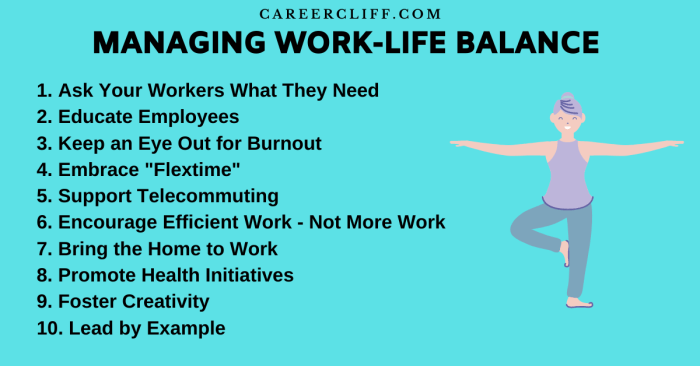
Maintaining physical fitness is crucial for achieving a healthy work-life balance. Engaging in regular exercise can help reduce stress, improve mood, increase energy levels, and enhance overall well-being.
Exercises for a Busy Schedule
- HIIT (High-Intensity Interval Training): Short, intense workouts that can be done in a limited amount of time.
- Bodyweight exercises: Push-ups, squats, lunges, and planks require no equipment and can be done anywhere.
- Yoga or Pilates: Improve flexibility, strength, and mental focus with these low-impact workouts.
- Walking or running: Incorporate cardio by walking during breaks or jogging before or after work.
- Desk exercises: Stretch or do quick exercises at your desk to combat the effects of sitting for long periods.
Benefits of Regular Physical Activity
Regular physical activity has numerous benefits for mental health, including:
- Reduced stress and anxiety levels.
- Improved mood and self-esteem.
- Enhanced cognitive function and productivity.
- Better sleep quality.
- Increased resilience to mental health issues.
Healthy Eating
Eating a nutritious diet plays a crucial role in maintaining overall health, including work performance and mental wellness. Proper nutrition can impact your energy levels, concentration, and mood, ultimately affecting your productivity and efficiency at work.
Impact of Healthy Eating on Work Performance
Eating a well-balanced diet rich in fruits, vegetables, whole grains, lean proteins, and healthy fats provides your body with the necessary nutrients to function optimally. This can lead to improved focus, mental clarity, and sustained energy throughout the day, enabling you to tackle tasks more effectively and efficiently.
Tips for Meal Planning to Support Work-Life Balance
- Plan your meals ahead of time to ensure you have nutritious options readily available.
- Include a variety of food groups in your meals to ensure you are getting a range of nutrients.
- Prep meals in bulk to save time during busy workdays.
- Opt for healthy snacks like nuts, fruits, yogurt, or whole-grain crackers to keep you fueled between meals.
- Stay hydrated by drinking plenty of water throughout the day.
Nutrition’s Contribution to Mental Wellness
Proper nutrition not only impacts physical health but also plays a significant role in mental wellness. Consuming nutrient-dense foods can support brain function, regulate mood, and reduce the risk of mental health conditions. For example, omega-3 fatty acids found in fish have been linked to improved cognitive function and reduced symptoms of depression.
Preventive Care
Preventive care plays a crucial role in maintaining a healthy work-life balance. By taking proactive measures to prevent health issues, individuals can ensure they are better equipped to handle the demands of both their professional and personal lives.
Importance of Preventive Care
Regular exercise, proper nutrition, and stress management techniques are key components of preventive healthcare practices for mental well-being. Engaging in activities such as yoga, meditation, or mindfulness exercises can help reduce stress levels and improve overall mental health.
Examples of Preventive Healthcare Practices
- Regular physical activity: Incorporating exercise into your daily routine can help boost mood, reduce anxiety, and improve overall mental well-being.
- Healthy eating habits: Consuming a balanced diet rich in fruits, vegetables, whole grains, and lean proteins can provide essential nutrients for optimal brain function and mental health.
- Mindfulness practices: Practicing mindfulness techniques such as deep breathing, meditation, or journaling can help promote relaxation and reduce feelings of stress and overwhelm.
Preventing Health Issues through Regular Check-ups
Regular check-ups with healthcare providers can help detect any potential health issues early on, preventing them from escalating and impacting work-life balance. By staying on top of preventive screenings and health assessments, individuals can address any concerns proactively and maintain their overall well-being.
Balanced Diet
Maintaining a balanced diet is crucial for optimal mental wellness. A well-rounded diet provides the necessary nutrients to support brain function and overall well-being.
Components of a Balanced Diet
- Proteins: Essential for neurotransmitter function and mood regulation. Include lean meats, poultry, fish, eggs, legumes, and nuts in your diet.
- Carbohydrates: The primary source of energy for the brain. Opt for whole grains, fruits, and vegetables for sustained energy levels.
- Fats: Omega-3 fatty acids are beneficial for brain health. Incorporate sources like fatty fish, avocados, nuts, and seeds.
- Vitamins and Minerals: Support cognitive function and reduce stress. Eat a variety of fruits, vegetables, and whole foods to meet your daily requirements.
- Hydration: Stay hydrated to support brain function and maintain focus throughout the day.
Well-Balanced Meal Plan for Busy Professionals
How to manage work-life balance for mental wellness – For a busy professional, planning meals ahead can help ensure you are getting a balanced diet. Here’s an example of a well-balanced meal plan:
| Meal | Food Items |
|---|---|
| Breakfast | Greek yogurt with berries and almonds |
| Lunch | Grilled chicken salad with mixed greens, quinoa, and avocado |
| Snack | Carrot sticks with hummus |
| Dinner | Baked salmon with roasted sweet potatoes and steamed broccoli |
Impact of a Balanced Diet on Energy Levels and Productivity
A balanced diet plays a significant role in boosting energy levels and enhancing productivity. When you fuel your body with the right nutrients, you are better equipped to concentrate, make sound decisions, and manage stress effectively. Consistent energy throughout the day can help you stay focused and accomplish tasks efficiently, leading to increased productivity in both your personal and professional life.
Regular Exercise: How To Manage Work-life Balance For Mental Wellness
Regular exercise is crucial for maintaining overall health and well-being. Not only does it help in physical fitness, but it also plays a significant role in improving mental wellness. Incorporating regular exercise into your daily routine has numerous benefits that can positively impact your mental clarity and reduce stress levels.
Benefits of Regular Exercise
- Improves mood and reduces feelings of anxiety and depression
- Increases energy levels and promotes better sleep
- Boosts self-esteem and confidence
- Enhances cognitive function and memory
- Reduces the risk of chronic diseases such as heart disease, diabetes, and obesity
Simple Exercises for Home or Work
- Take a brisk walk during your lunch break
- Do bodyweight exercises like squats, lunges, and push-ups
- Practice yoga or stretching exercises to improve flexibility
- Use resistance bands or dumbbells for strength training
- Try high-intensity interval training (HIIT) workouts for a quick and effective session
Stress Reduction and Mental Clarity, How to manage work-life balance for mental wellness
Regular physical activity has been shown to reduce stress levels by releasing endorphins, which act as natural painkillers and mood elevators. Exercise also helps in clearing the mind, improving focus, and enhancing mental clarity. By incorporating exercise into your daily routine, you can better manage stress and maintain a positive outlook on life.
Holistic Wellness
Understanding the concept of holistic wellness is essential in achieving a balanced work-life routine. It involves focusing on all aspects of well-being, including mental, physical, emotional, and spiritual health.
Practices to Enhance Mental Well-being
- Engage in mindfulness meditation to reduce stress and improve mental clarity.
- Practice deep breathing exercises to calm the mind and regulate emotions.
- Connect with nature regularly to boost mood and reduce anxiety.
- Cultivate positive relationships and social connections for emotional support.
- Engage in activities that bring joy and fulfillment, such as hobbies or creative pursuits.
Importance of Addressing All Aspects of Wellness
It is crucial to address all aspects of wellness to lead a balanced life. Neglecting one area can have a ripple effect on other areas of well-being, leading to imbalances and overall decreased quality of life. By prioritizing holistic wellness, individuals can experience improved mental health, increased energy levels, and a greater sense of overall well-being.
Chronic Diseases
Chronic diseases can have a significant impact on work-life balance as they often require ongoing management, treatment, and monitoring. This can lead to increased stress, fatigue, and limitations in daily activities, affecting both mental wellness and productivity.
Managing Chronic Diseases and Work-Life Balance
- Develop a routine: Establishing a daily routine that includes time for medication, doctor’s appointments, and self-care can help maintain stability and reduce stress.
- Set realistic goals: Break tasks into manageable steps and prioritize essential activities to prevent feeling overwhelmed.
- Communicate with your employer: Inform your employer about your condition and any accommodations you may need to manage your health while fulfilling your work responsibilities.
- Seek support: Connect with support groups, counselors, or therapists to discuss your challenges and emotions related to living with a chronic illness.
- Practice self-care: Prioritize activities that promote relaxation, such as meditation, yoga, or hobbies that bring joy and reduce stress.
Mental Health and Coping with Chronic Illnesses
- Focus on the present: Practice mindfulness to stay grounded in the present moment and reduce anxiety about the future.
- Stay connected: Maintain social connections with friends and family members who can provide emotional support and understanding.
- Monitor your mental health: Pay attention to changes in your mood, sleep patterns, or energy levels and seek professional help if needed.
- Stay informed: Educate yourself about your condition, treatment options, and lifestyle changes that can improve your overall well-being.
- Practice gratitude: Focus on the positive aspects of your life and celebrate small victories to boost your mood and resilience.
Immunity Boosters
Immunity plays a crucial role in maintaining overall well-being, including mental wellness for work-life balance. A strong immune system can help reduce the risk of illnesses, allowing individuals to focus on their work and personal life without being constantly bogged down by health issues.
Immunity-Boosting Foods and Supplements
Eating a balanced diet rich in certain nutrients can help boost immunity. Some examples of immunity-boosting foods include:
- Citrus fruits like oranges, lemons, and grapefruits, which are high in Vitamin C
- Leafy greens such as spinach and kale, packed with antioxidants and vitamins
- Yogurt and other probiotics to support gut health, a key component of a strong immune system
- Garlic, known for its antimicrobial properties
- Turmeric, which contains curcumin, a compound with powerful anti-inflammatory and antioxidant effects
In addition to foods, certain supplements can also help strengthen the immune system. Some popular options include Vitamin D, Zinc, and Echinacea. It’s essential to consult with a healthcare provider before adding supplements to your routine to ensure they are safe and suitable for you.
Contribution to Overall Well-being
A robust immune system not only protects the body from infections but also plays a significant role in maintaining overall well-being. When your immune system is functioning optimally, you are less likely to fall ill, allowing you to stay productive at work and enjoy your personal life without disruptions. By incorporating immunity-boosting foods and supplements into your diet, you can support your immune system and promote a healthy work-life balance.
FAQ Summary
How can I find time to incorporate exercise into my busy schedule?
Try short bursts of high-intensity interval training (HIIT) or opt for activities like brisk walking during lunch breaks to stay active.
What role does nutrition play in maintaining mental wellness?
Nutritious meals rich in fruits, vegetables, whole grains, and lean proteins can fuel your brain and support your emotional well-being.
Is it necessary to seek professional help for mental wellness?
If you’re experiencing persistent mental health issues, consulting a mental health professional can provide valuable support and guidance.


More Stories
Mental health support for chronic disease patients – Strategies and Insights
Immune-boosting recipes for the whole family: Healthy and Delicious Meals
Best practices for chronic disease prevention: Strategies for a healthier life